Celâleddin Çelik
University of Health Sciences Interior Restoration and Design
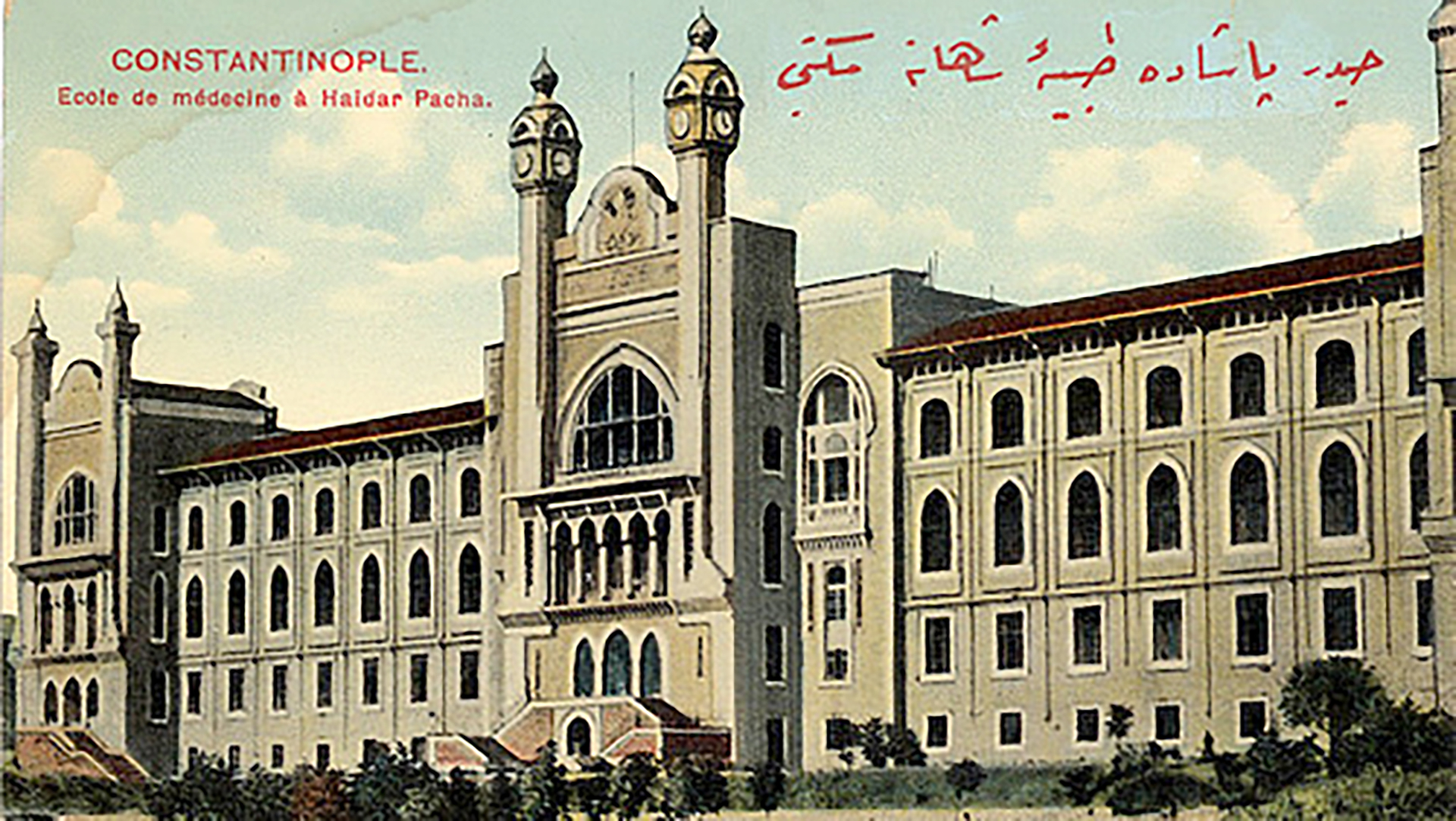
Mekteb-i Tıbbiye-i Şahane is a century-old landmark with a distinguished place in the city’s urban aesthetic. Situated at the heart of Istanbul and contributing to the Bosphorus silhouette with its waterfront façade, the building carries both symbolic and architectural significance. Working on its interiors has been an important undertaking that required not only reflecting the beauty and stylistic sensibilities of its era but also adapting the structure to contemporary functions in a coherent and operational manner.
Another challenging aspect of the project was the time constraint. To meet the required deadlines, professional teams began working in a synchronized manner from the outset. The office’s experience with similar heritage projects played a key role in accelerating the process.
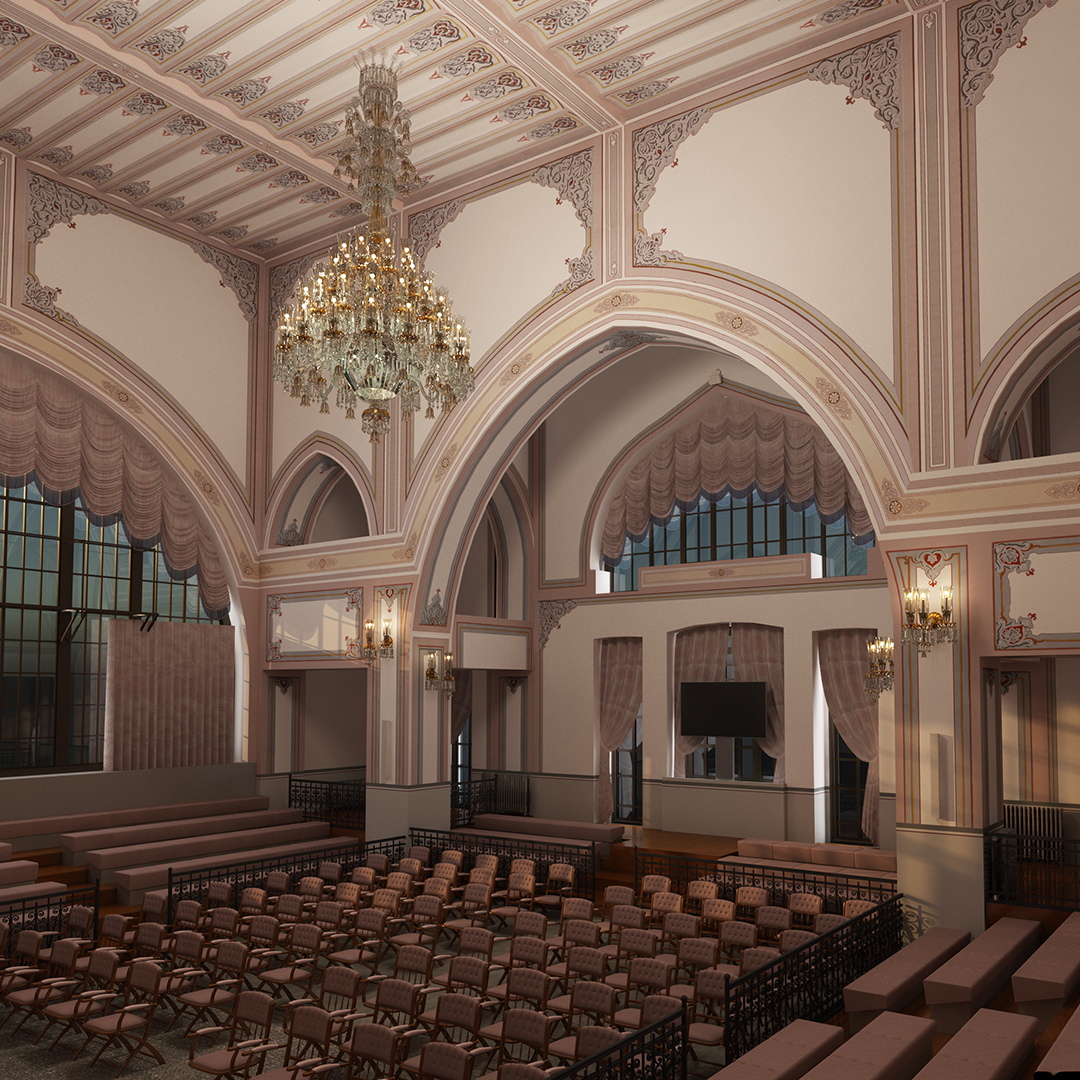
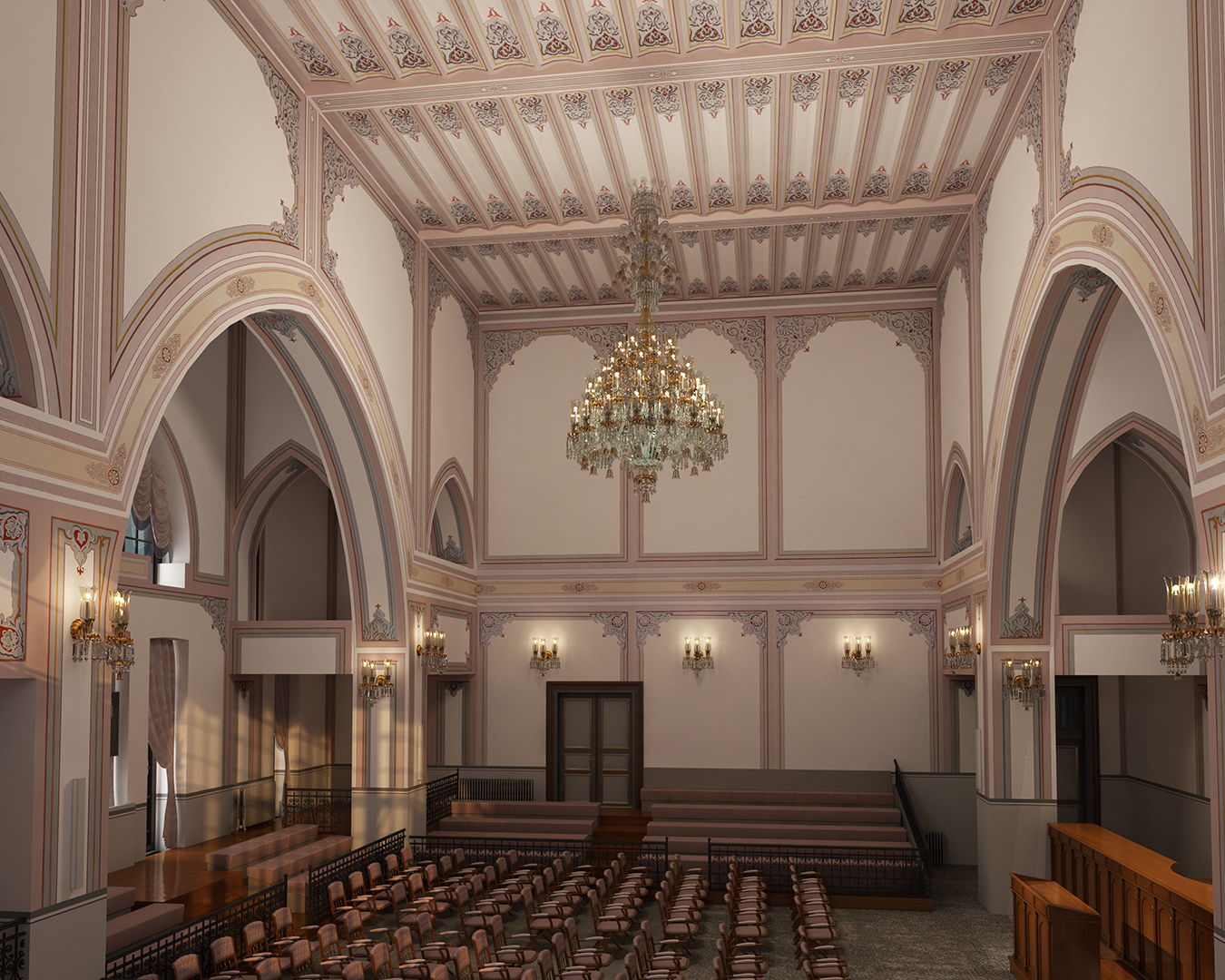
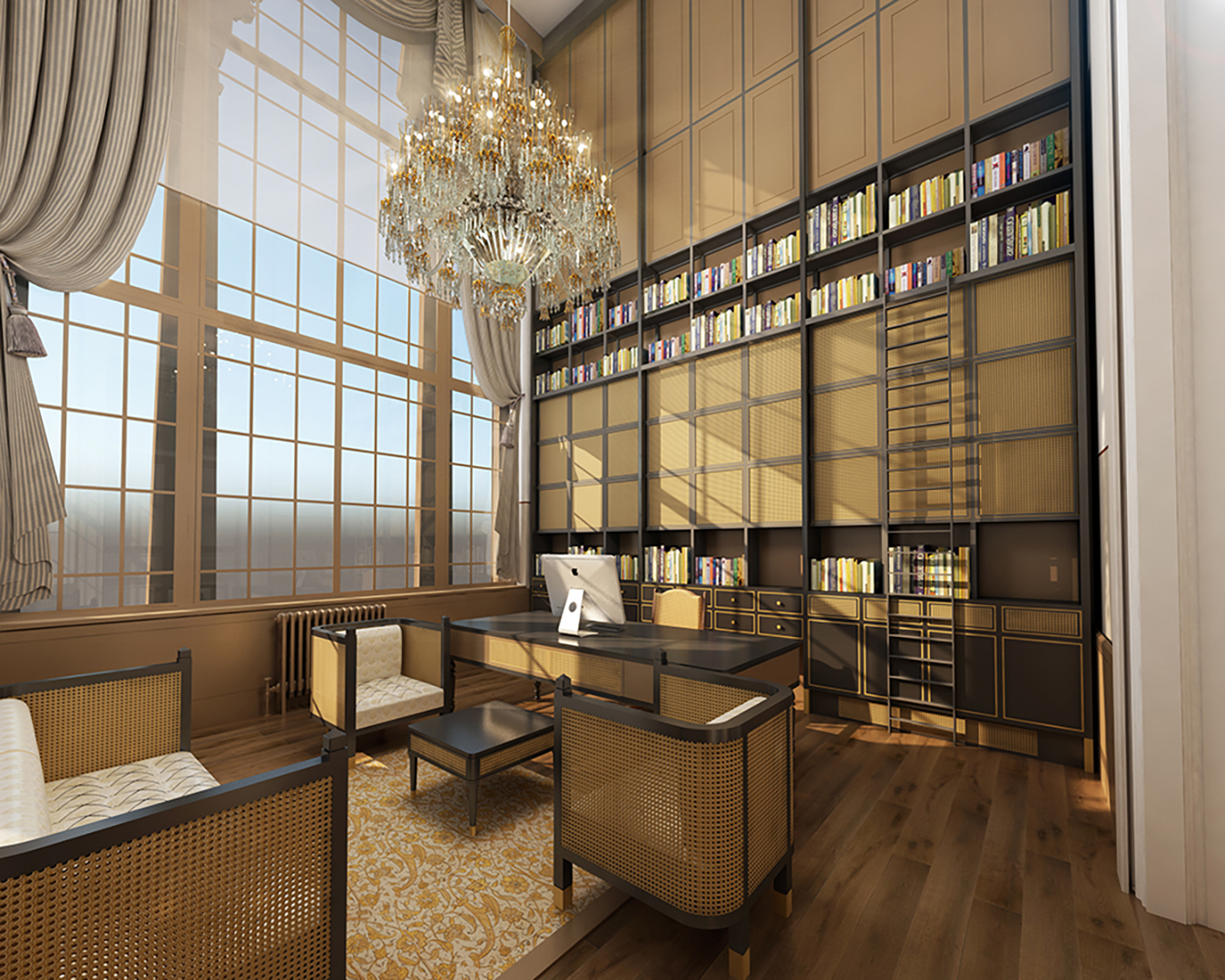
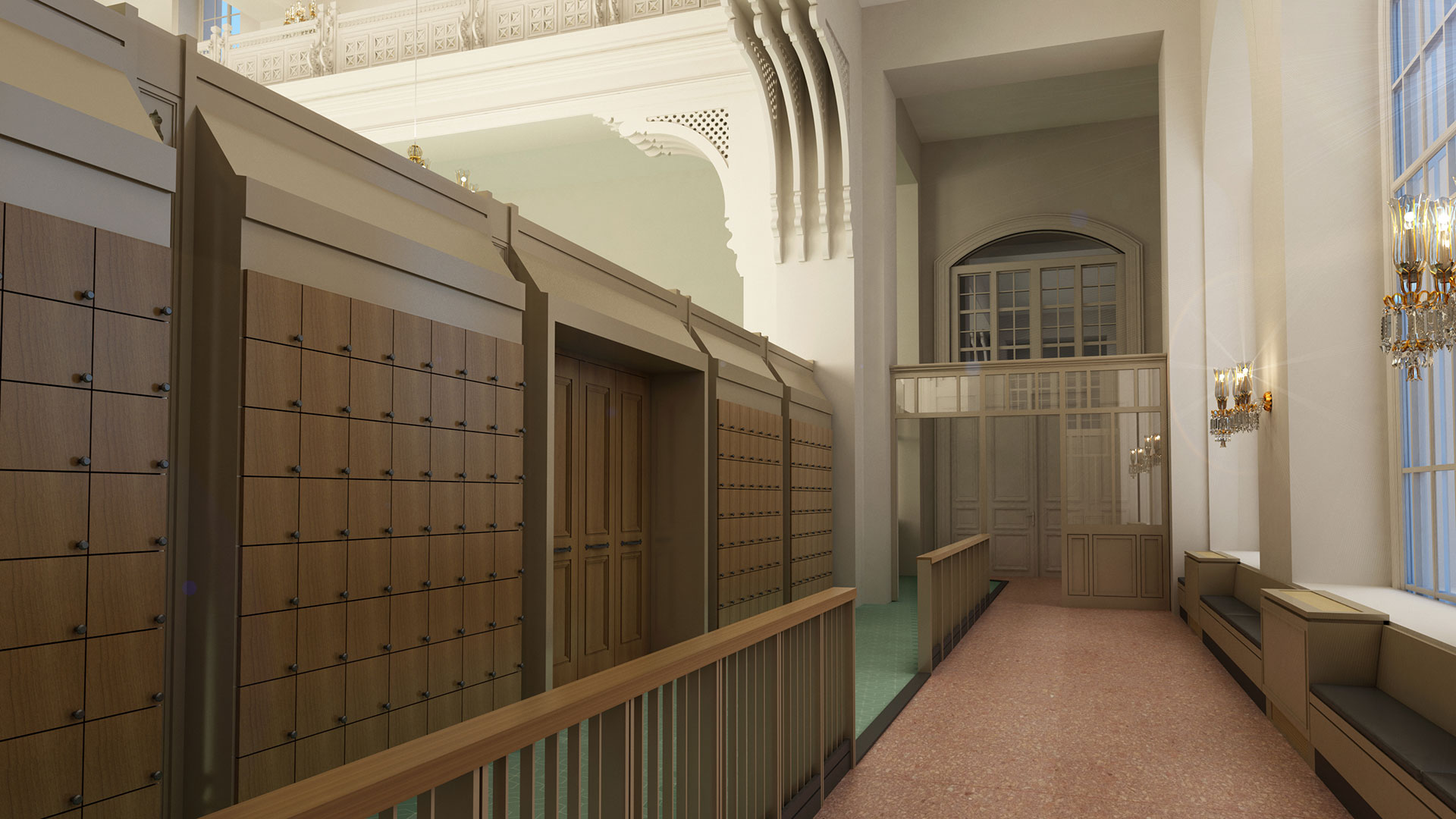
The overall approach to the interior design was to recapture the building’s original atmosphere while integrating modern additions without disturbing the character or spatial feeling of the historic interiors.
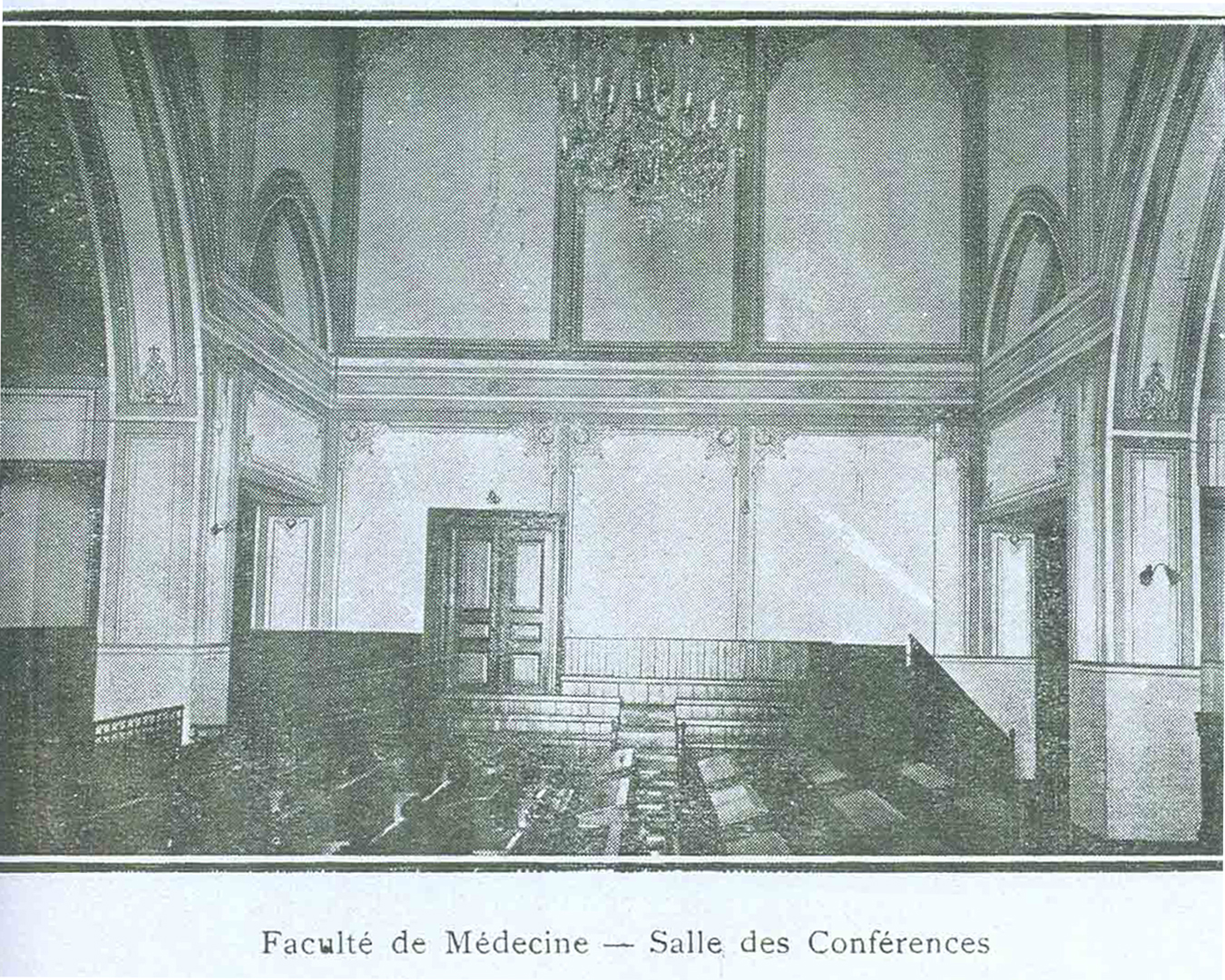
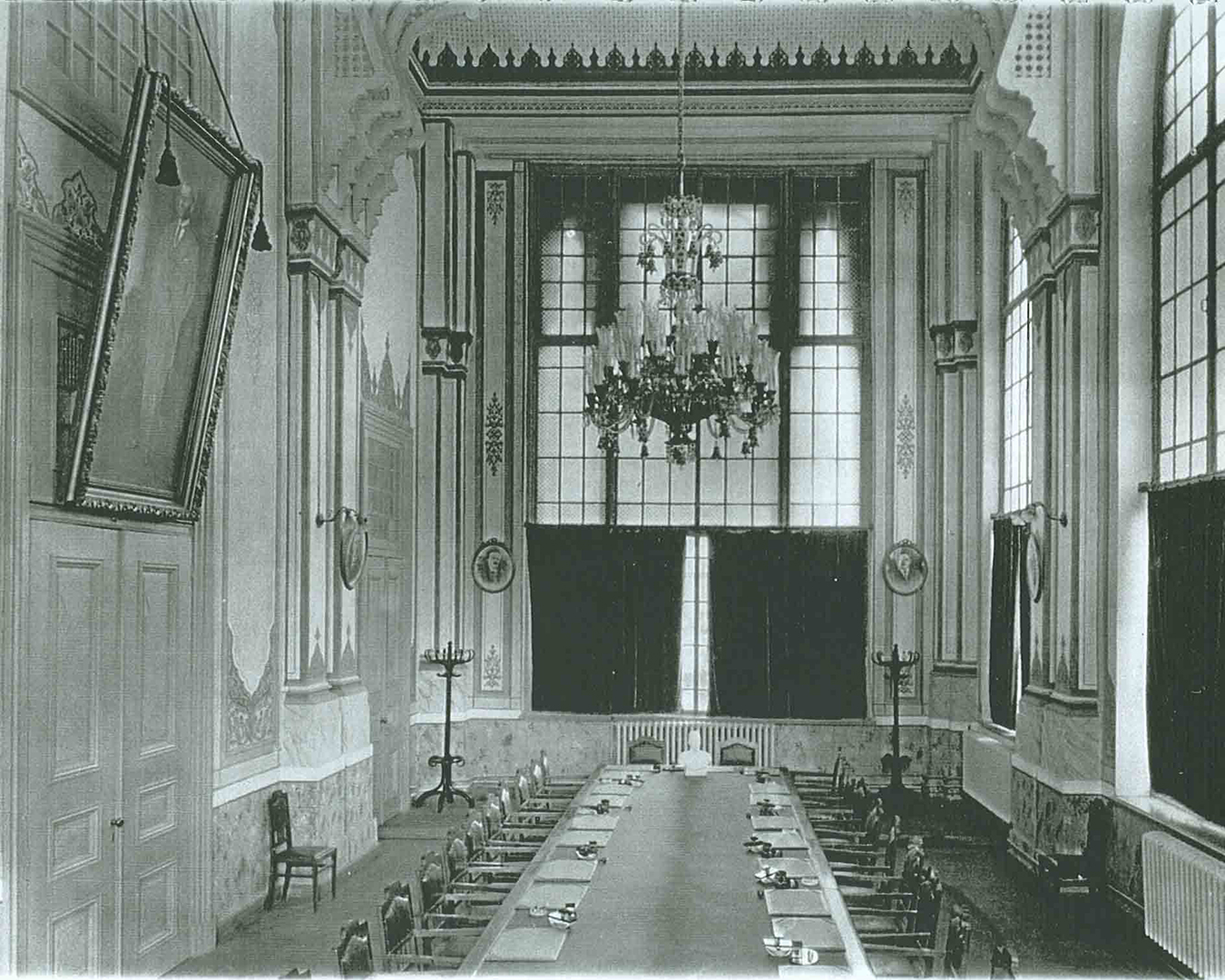
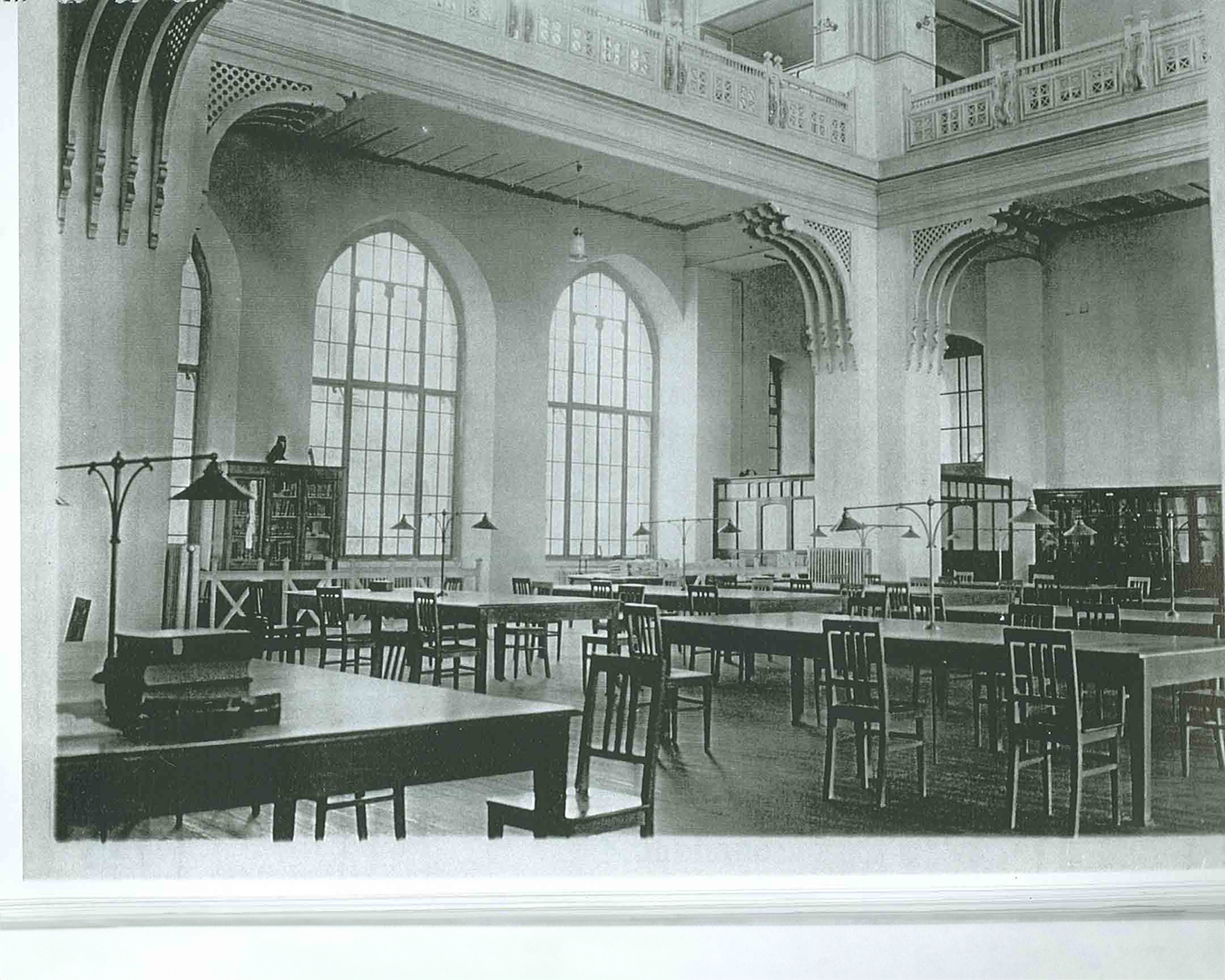
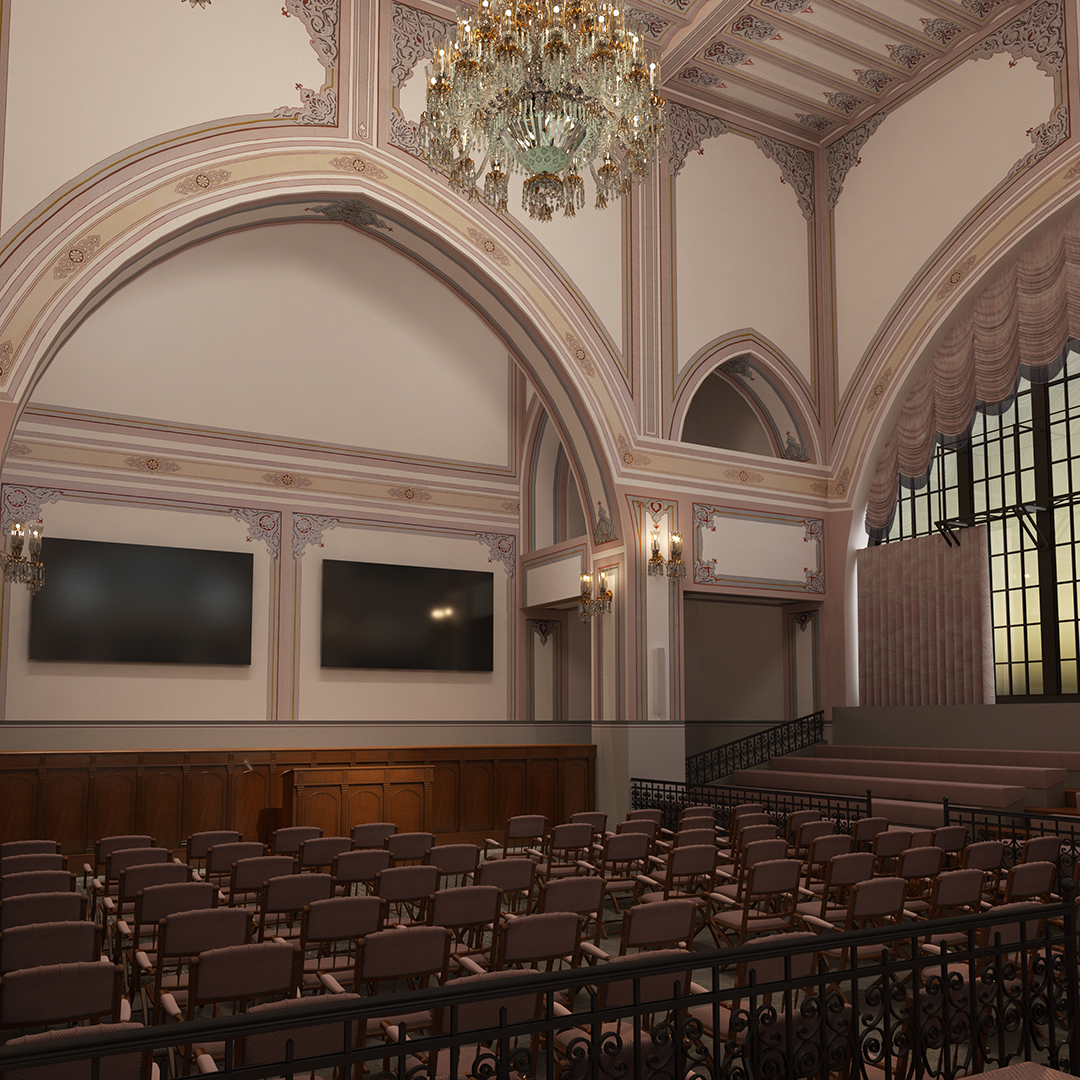
Historical photographs of the building served as the principal reference. These invaluable images reveal the original decoration in remarkable detail. Reinterpreting the elements that remained compatible with the building’s current function became the backbone of the design strategy and allowed the historical atmosphere to be re-established with authenticity.
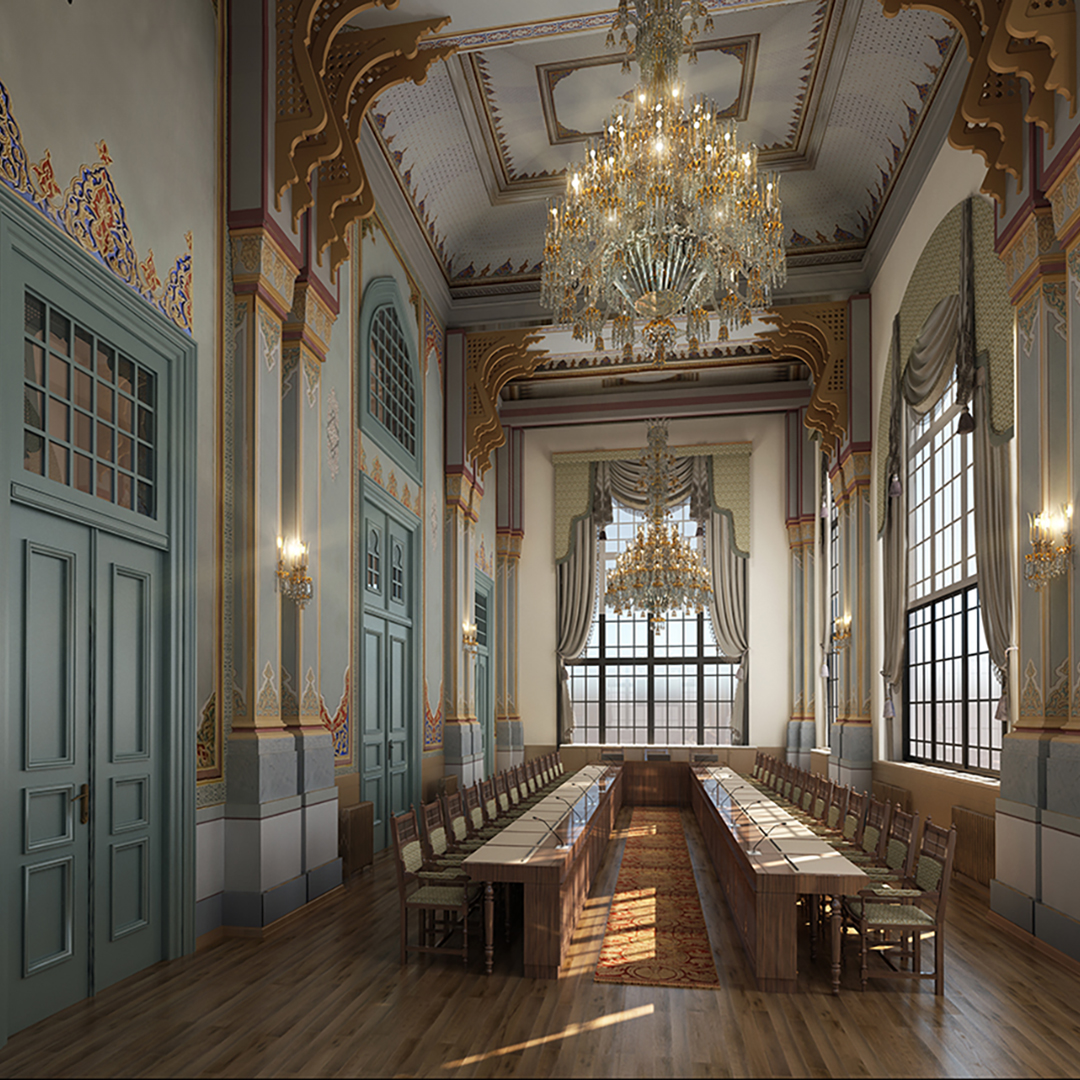
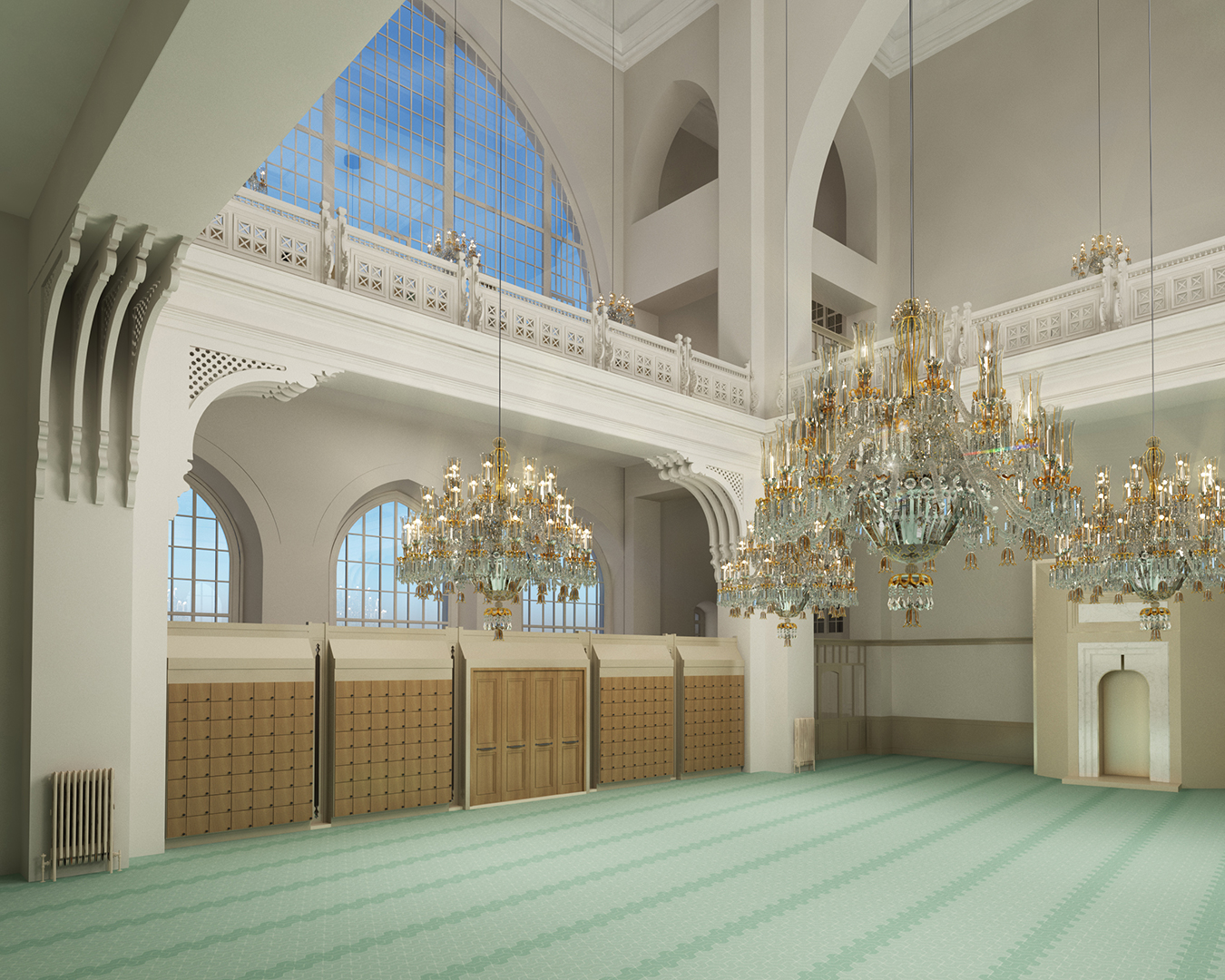
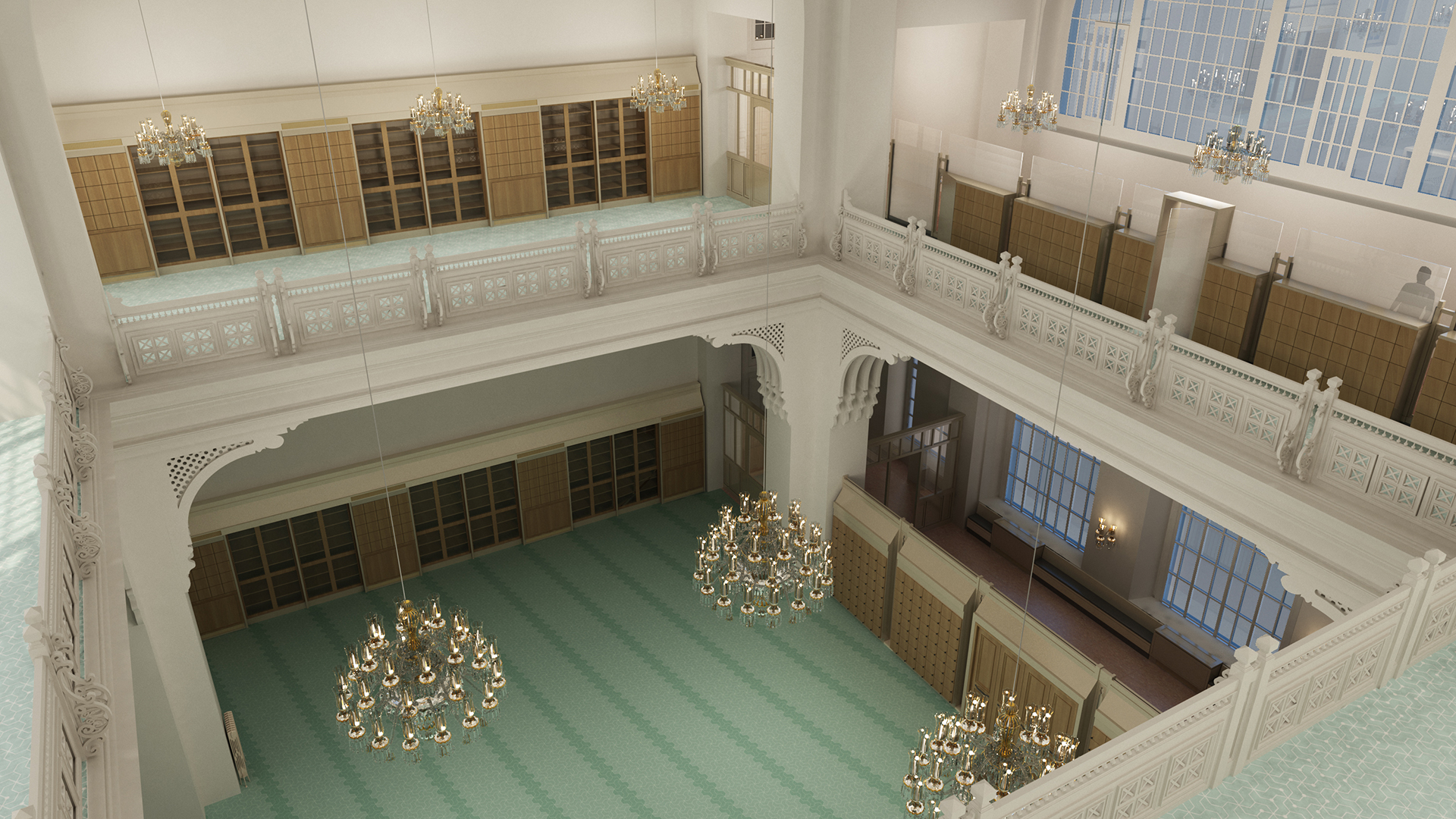
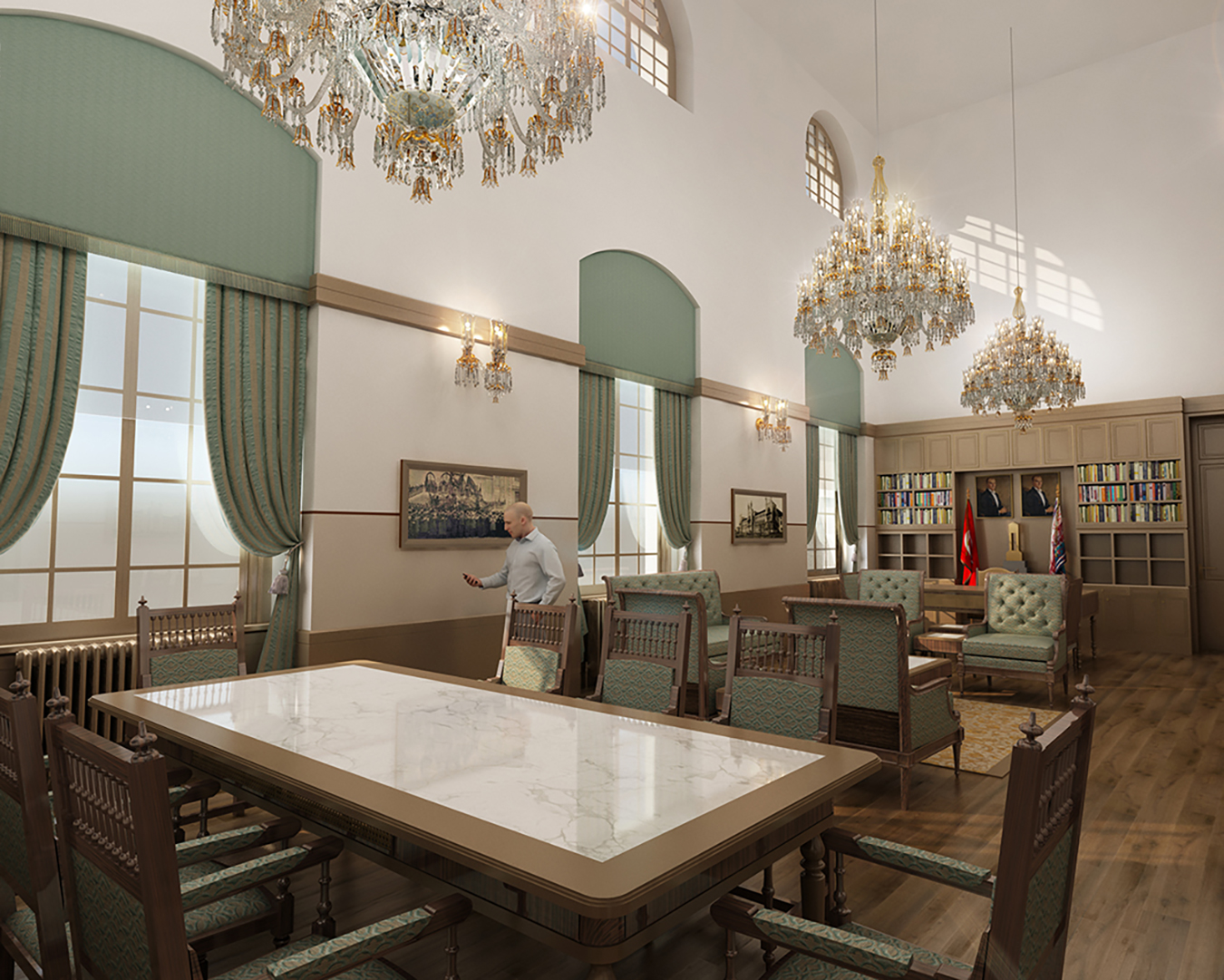
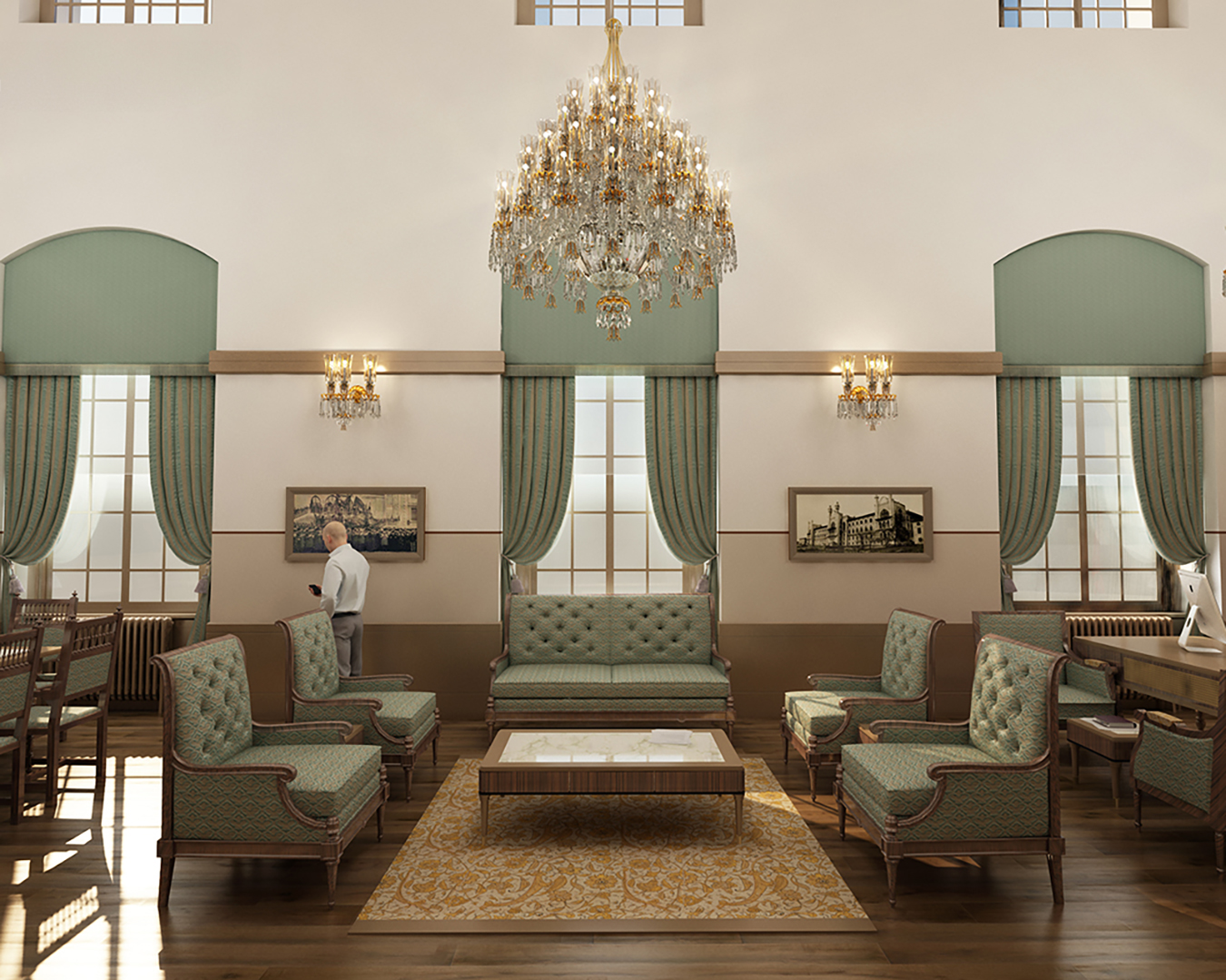
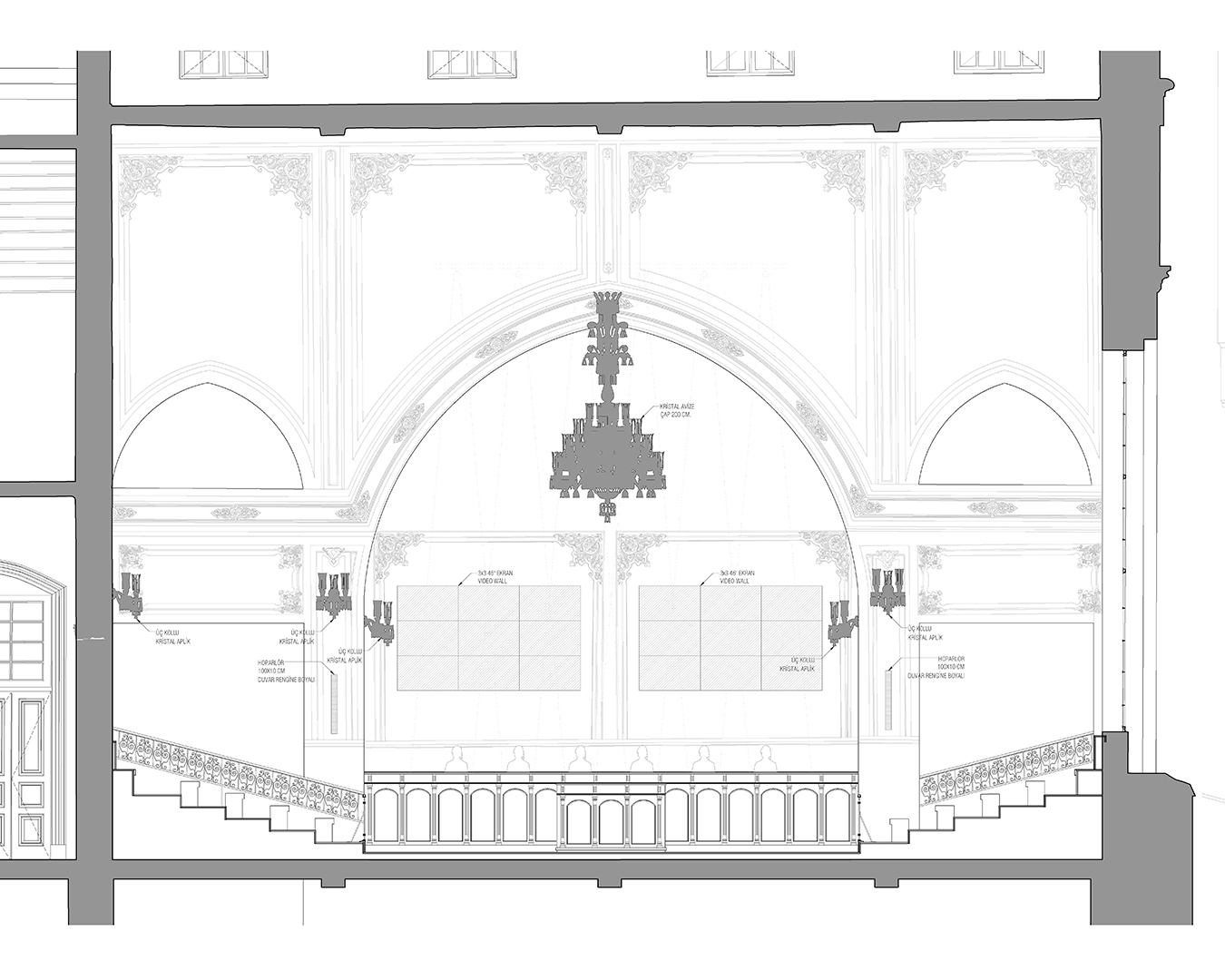
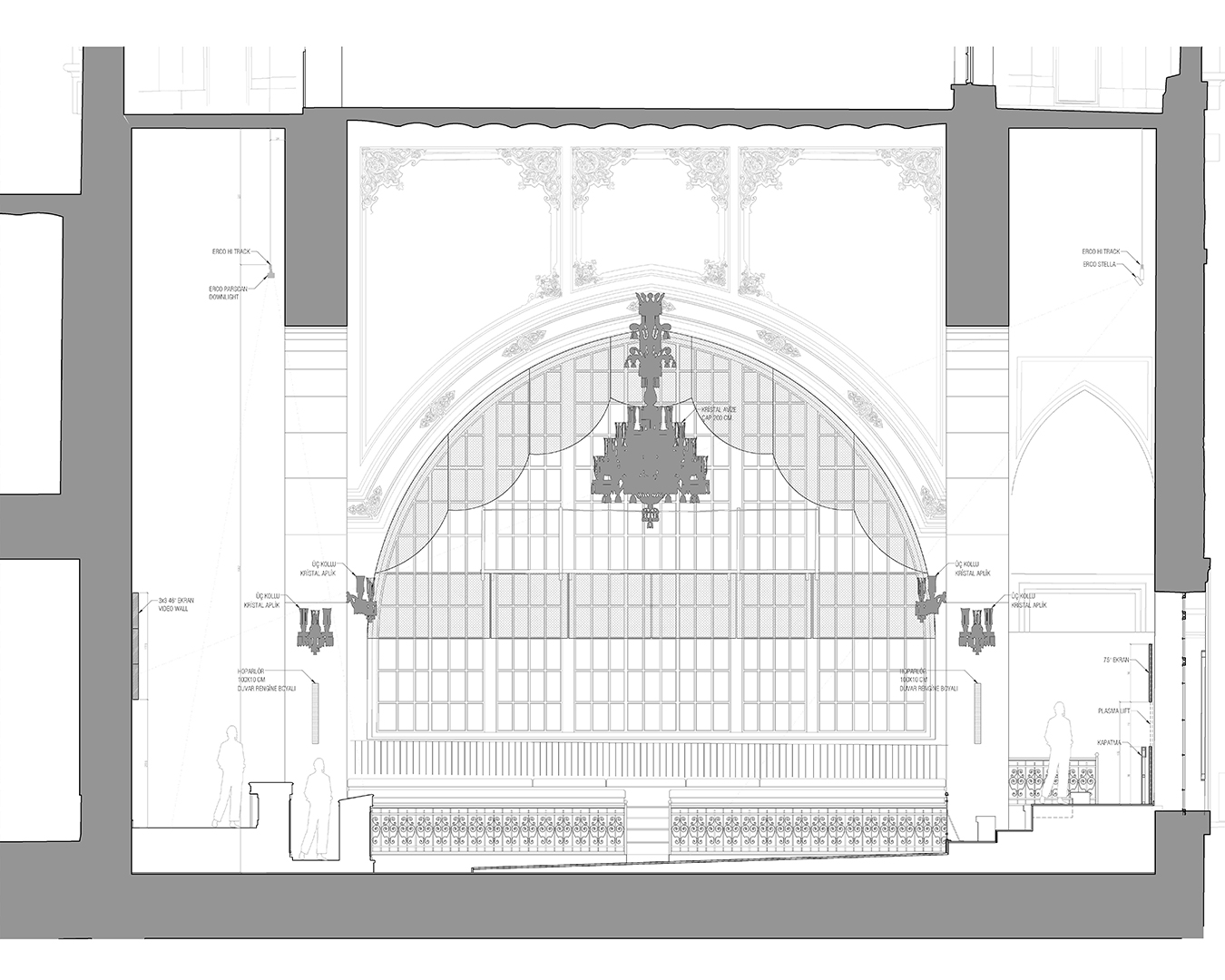
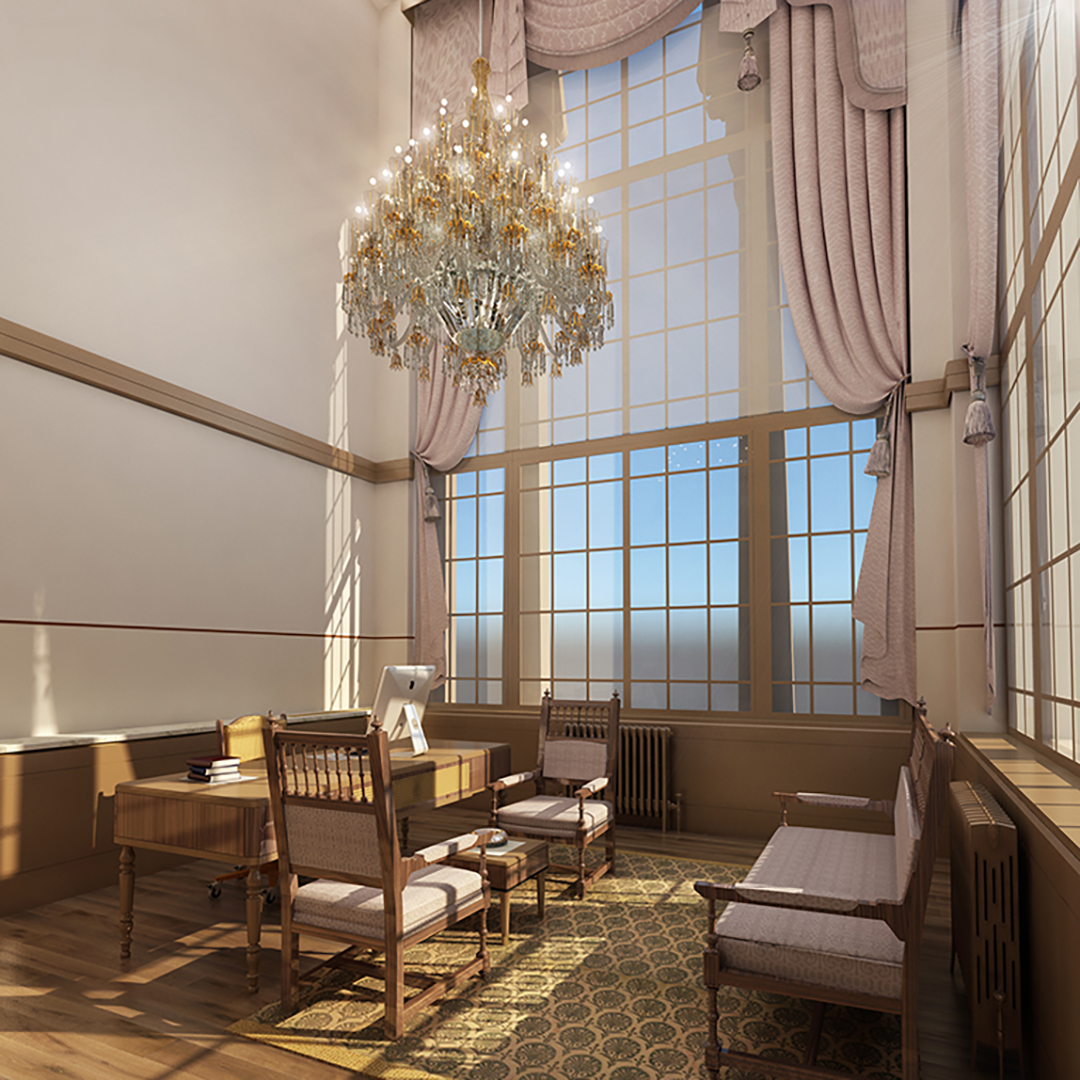
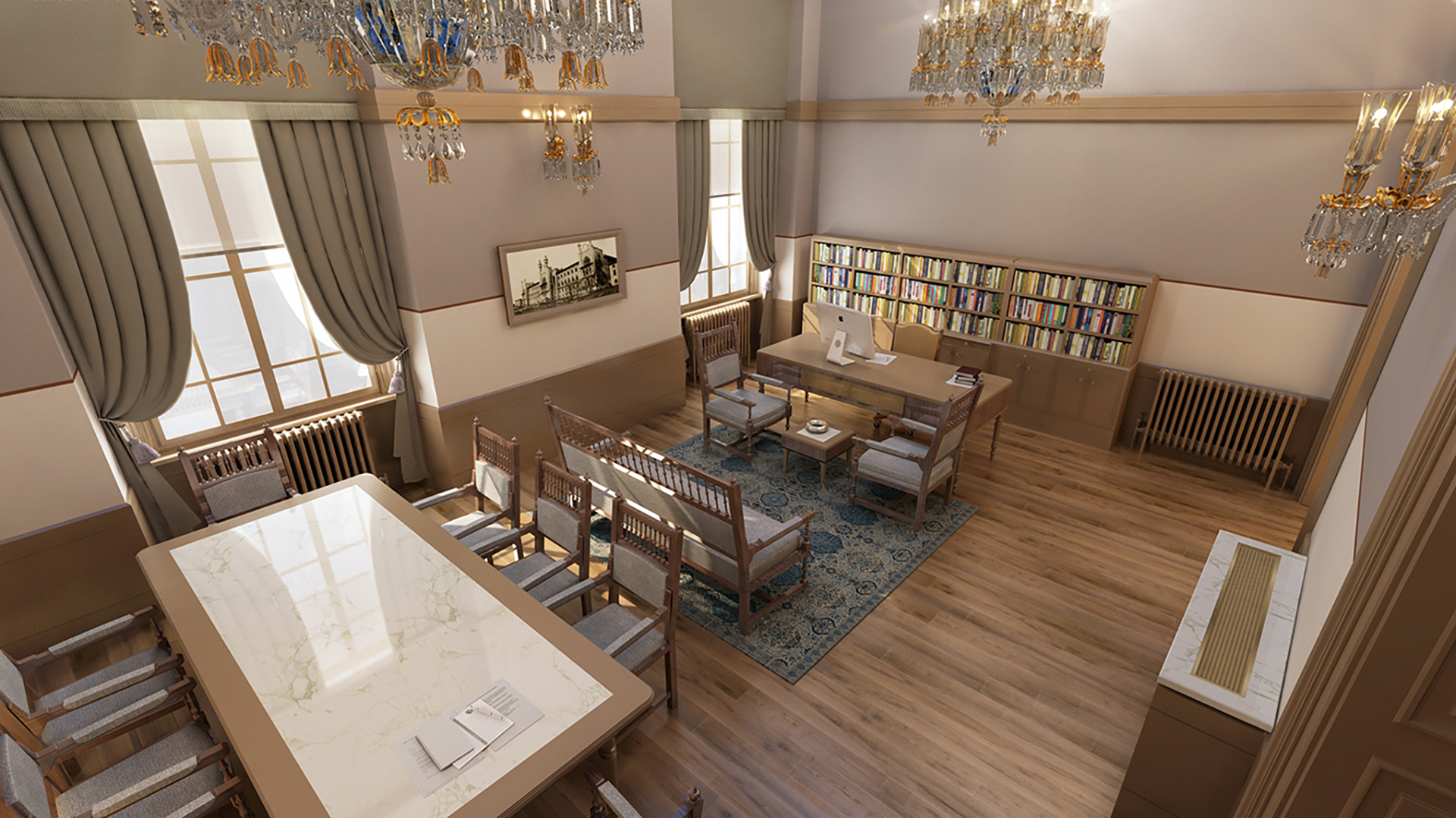
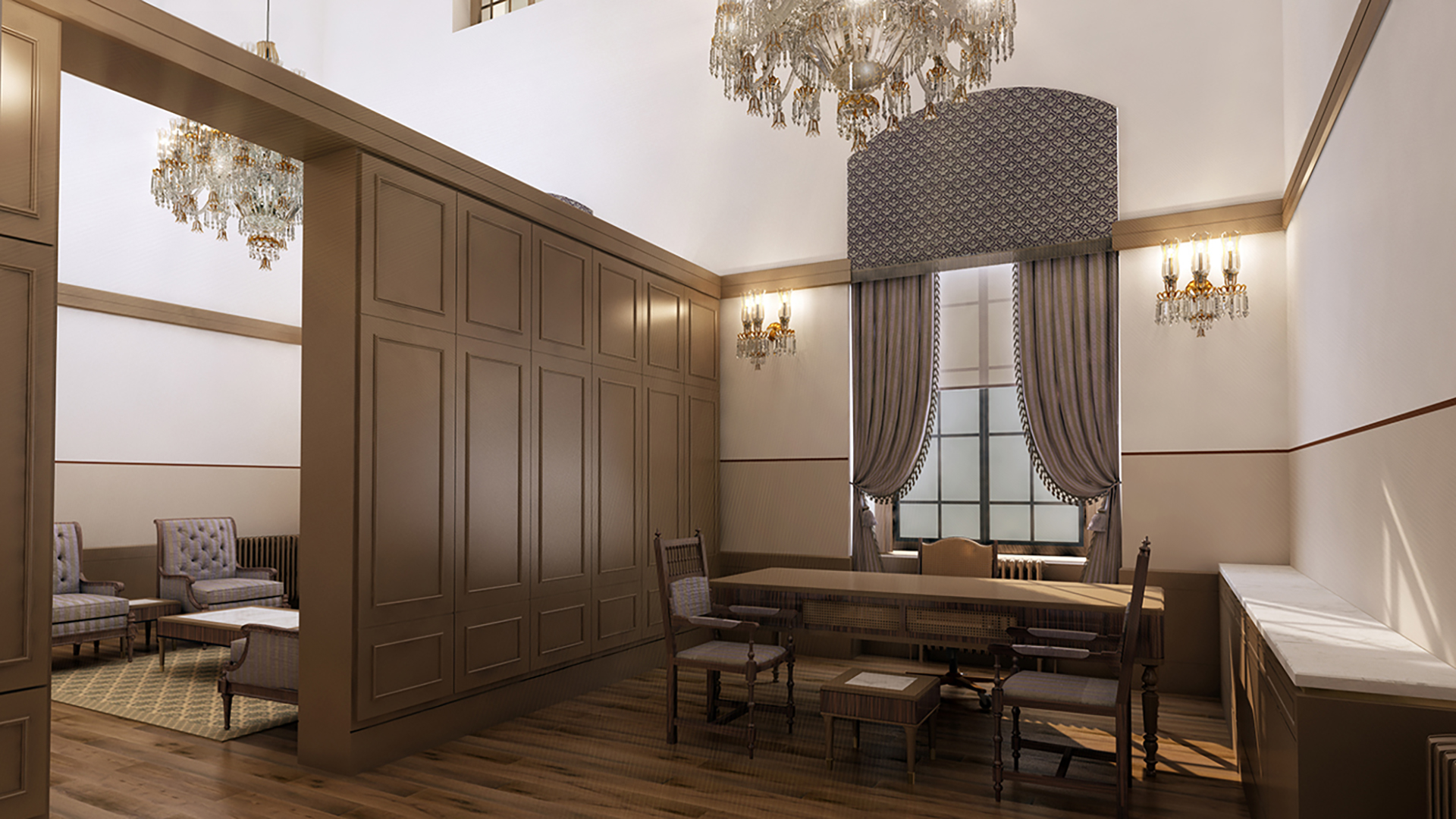
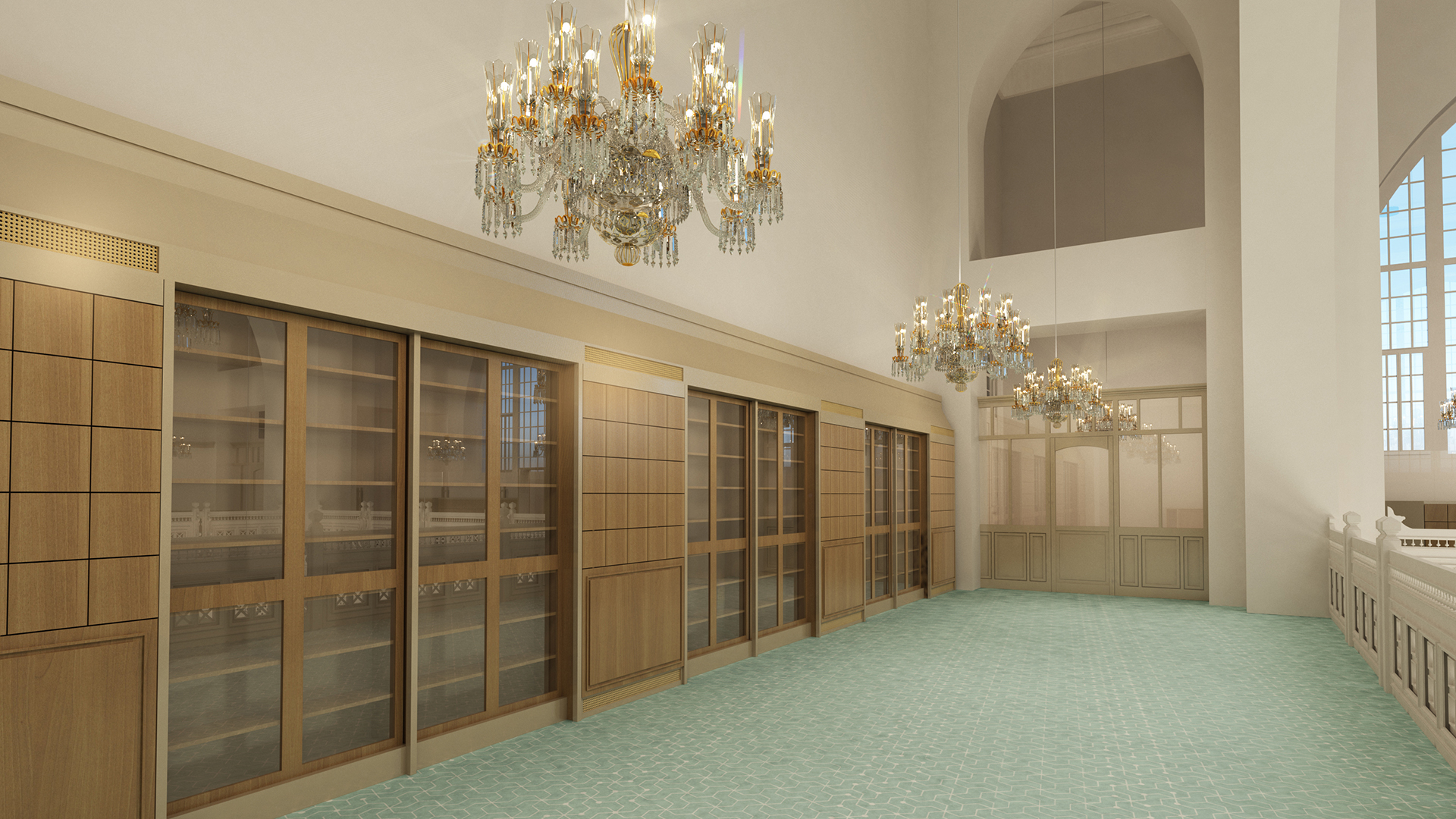
In the Rectorate and the Ali Ertugrul Halls, period crystal chandeliers, visible in the archival photographs, were reinstated. Although such chandeliers do not appear in the available images of the Rectorate’s central hall, the scale of the space and the conventions of the period indicate that a series of large chandeliers would have occupied the gallery void. For this reason, crystal chandeliers were reproduced using traditional techniques and crafted as the primary lighting elements that define the space.
The number and wattage of the bulbs were determined through professional lighting calculations. In locations where these values did not provide sufficient illumination, secondary fixtures were discreetly added without disturbing the spatial integrity.
Our fundamental lighting approach avoided modern decorative methods such as concealed lighting or wall-washing spots. The aim was to preserve the essential character of the space and to sustain its authenticity. The chandeliers, produced using the traditional sepus (overlaid) technique, were designed in accordance with the scale and light requirements of each hall, which determined their number of tiers, diameter, and arm count.
For upholstery and textiles, original Ottoman and Turkish patterned fabrics were selected. The intention was to avoid visually overwhelming motifs and instead use patterns that reveal themselves upon closer inspection, with low-contrast colors and subtle textures. The palette was derived from the characteristic tones of the period including deep and pastel yellows, burgundy, cinnamon, navy blue, teal, and terracotta. Within each room, these tones were combined in ways that remain dynamic and balanced, creating compositions that complement one another without monotony.
Today, the building stands as a living example of how architectural heritage can be preserved with precision while re-establishing aesthetic continuity in a contemporary context.